
Status
in progress
Client
Internal product
Duration
Ongoing
Overview
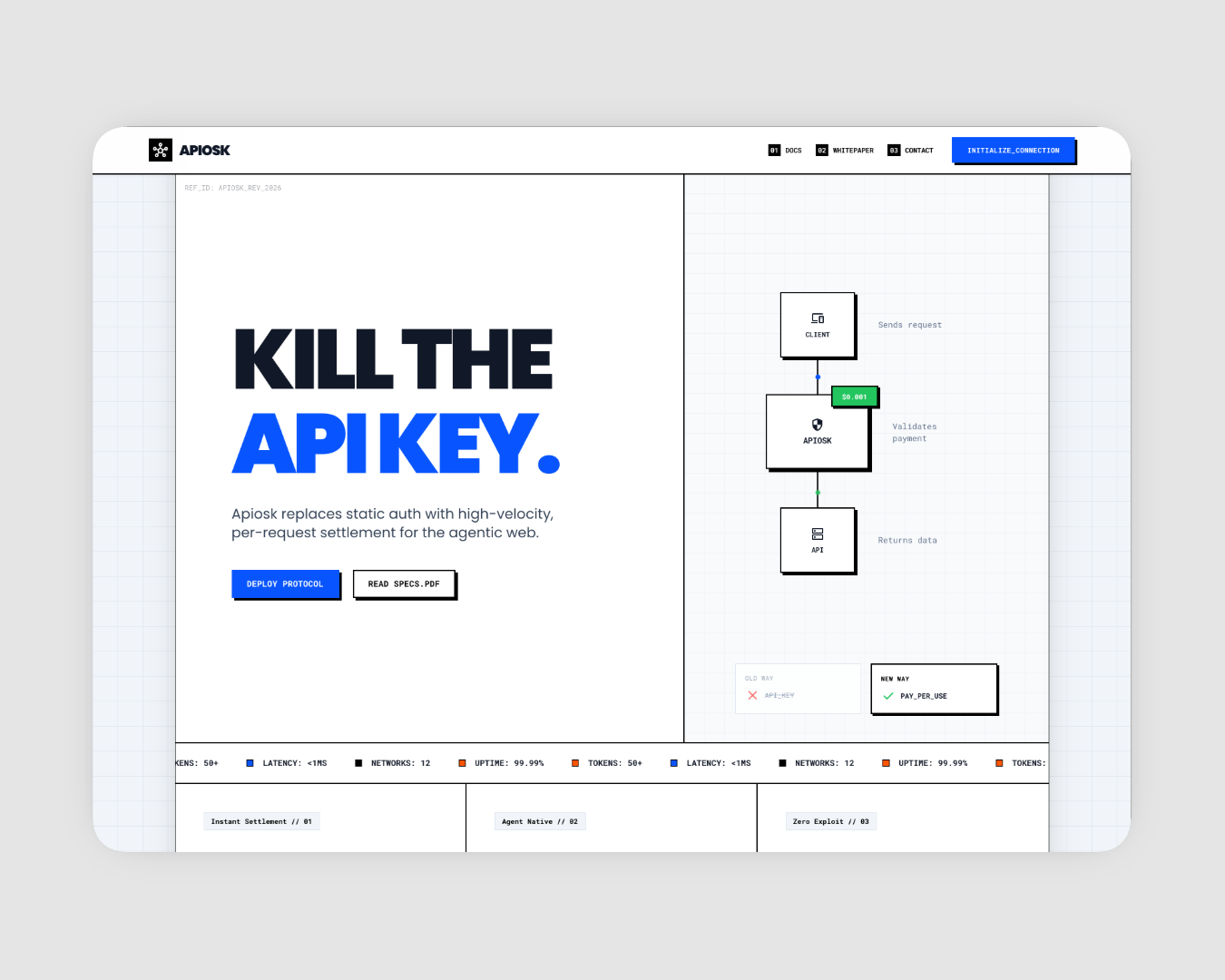
Apiosk is payment-native API infrastructure that enables AI agents and applications to discover, call, and pay for APIs on demand. It replaces traditional API keys, subscriptions, and invoicing with per-request USDC payments, turning payment into authentication and giving API providers a simpler way to monetize instantly consumable services.
Apiosk was built around a simple idea: APIs should be paid for the same way they are consumed—one request at a time. Traditional API access relies on API keys, subscriptions, and account provisioning, creating unnecessary friction for both providers and consumers. Apiosk replaces that model with payment-native authentication powered by the x402 protocol and on-chain settlement.
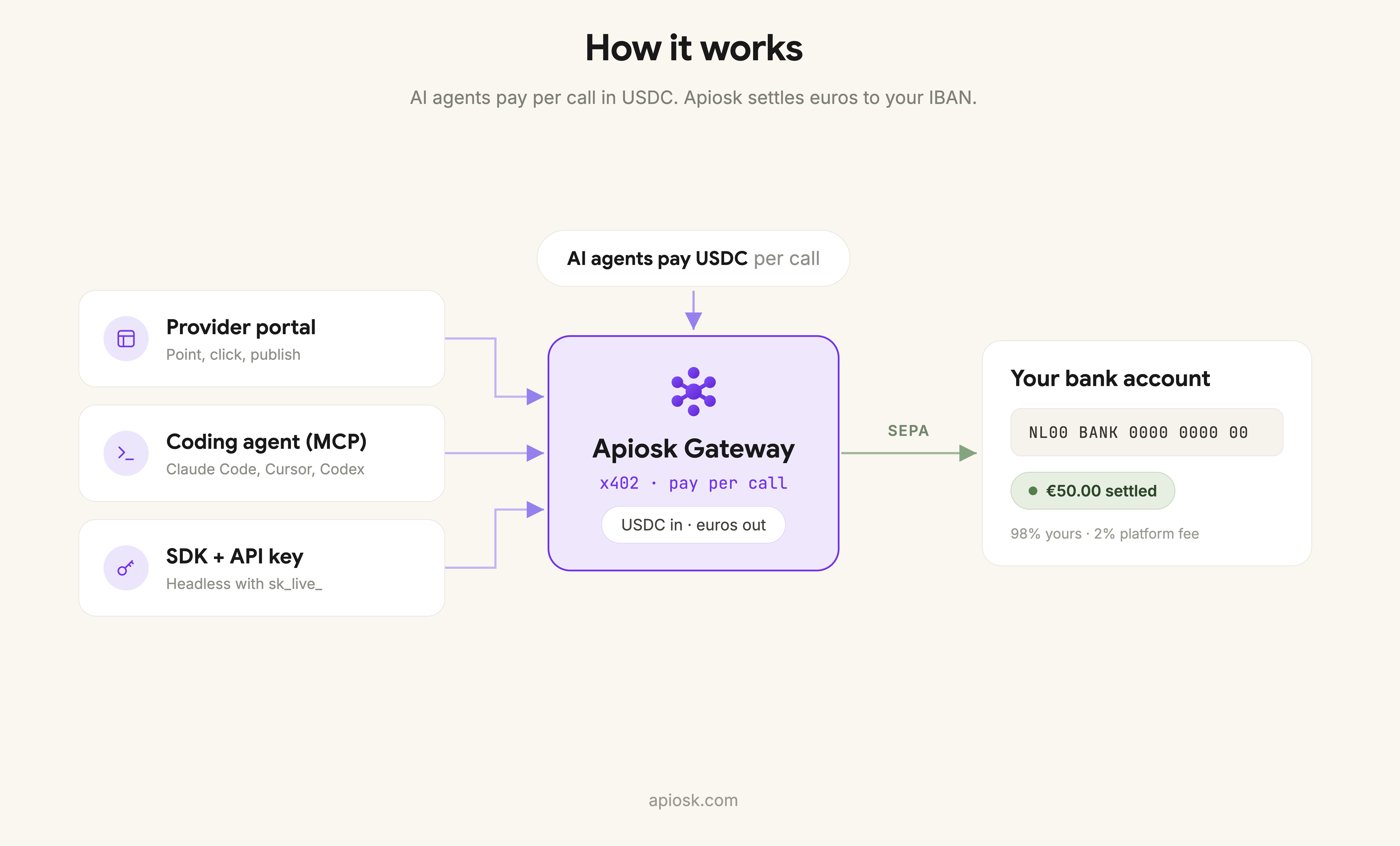
At its core is a high-performance Rust gateway that acts as a reverse proxy. When a client requests a paid endpoint, the gateway returns structured payment requirements, verifies the payment proof, and forwards the request once payment has been confirmed. This enables instant, trustless access for browsers, backend services, scripts, and AI agents without API keys or manual provisioning.
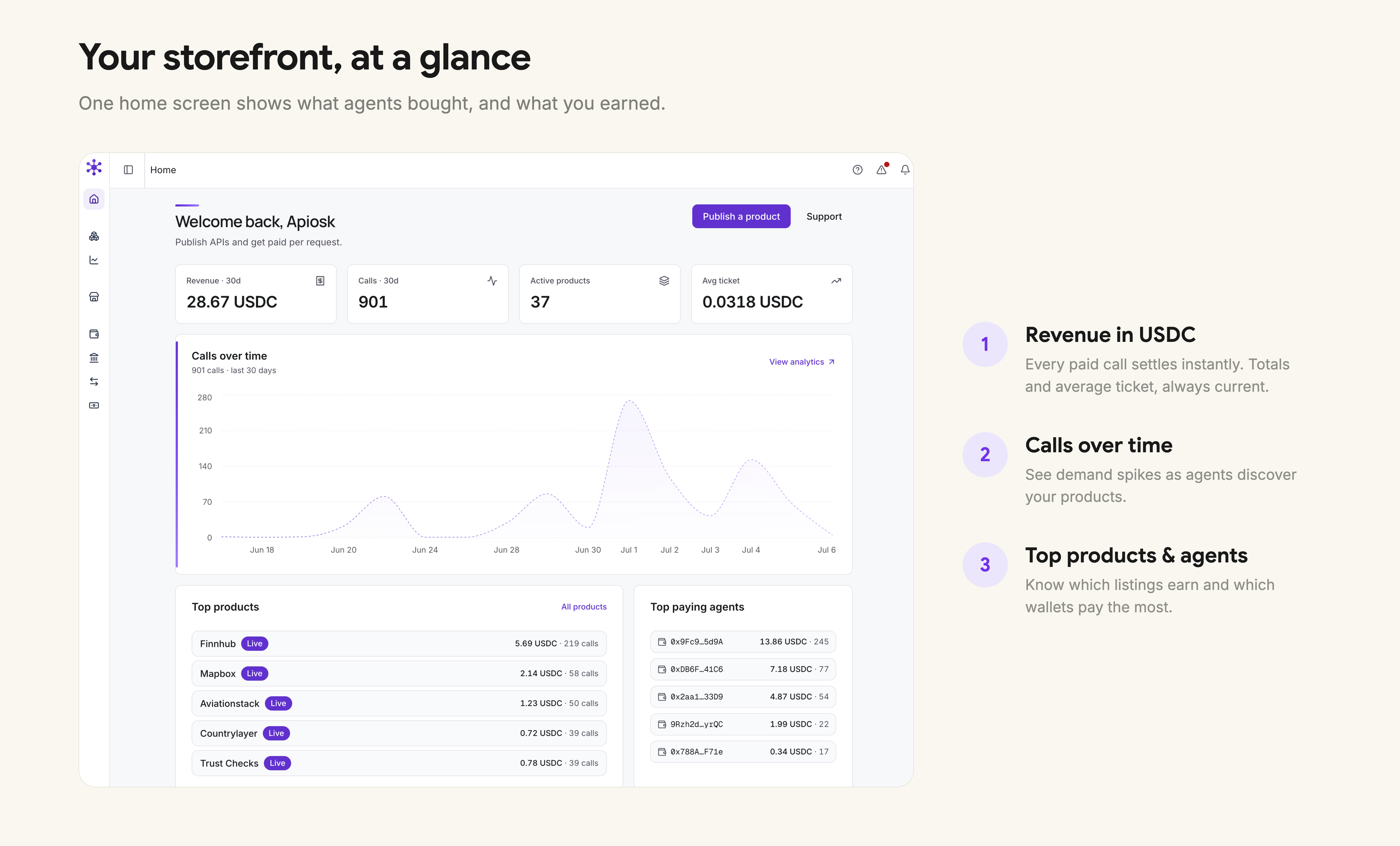
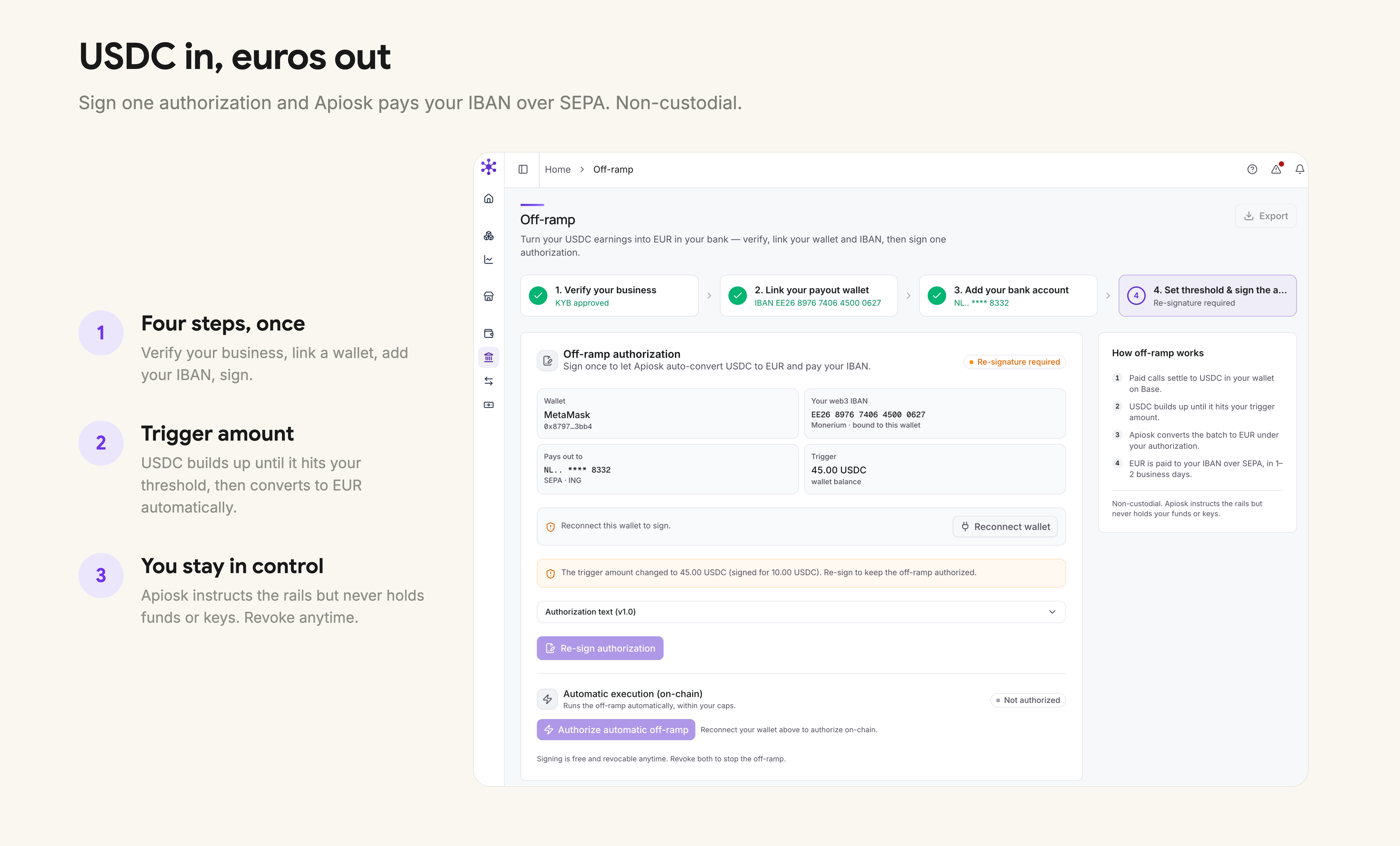
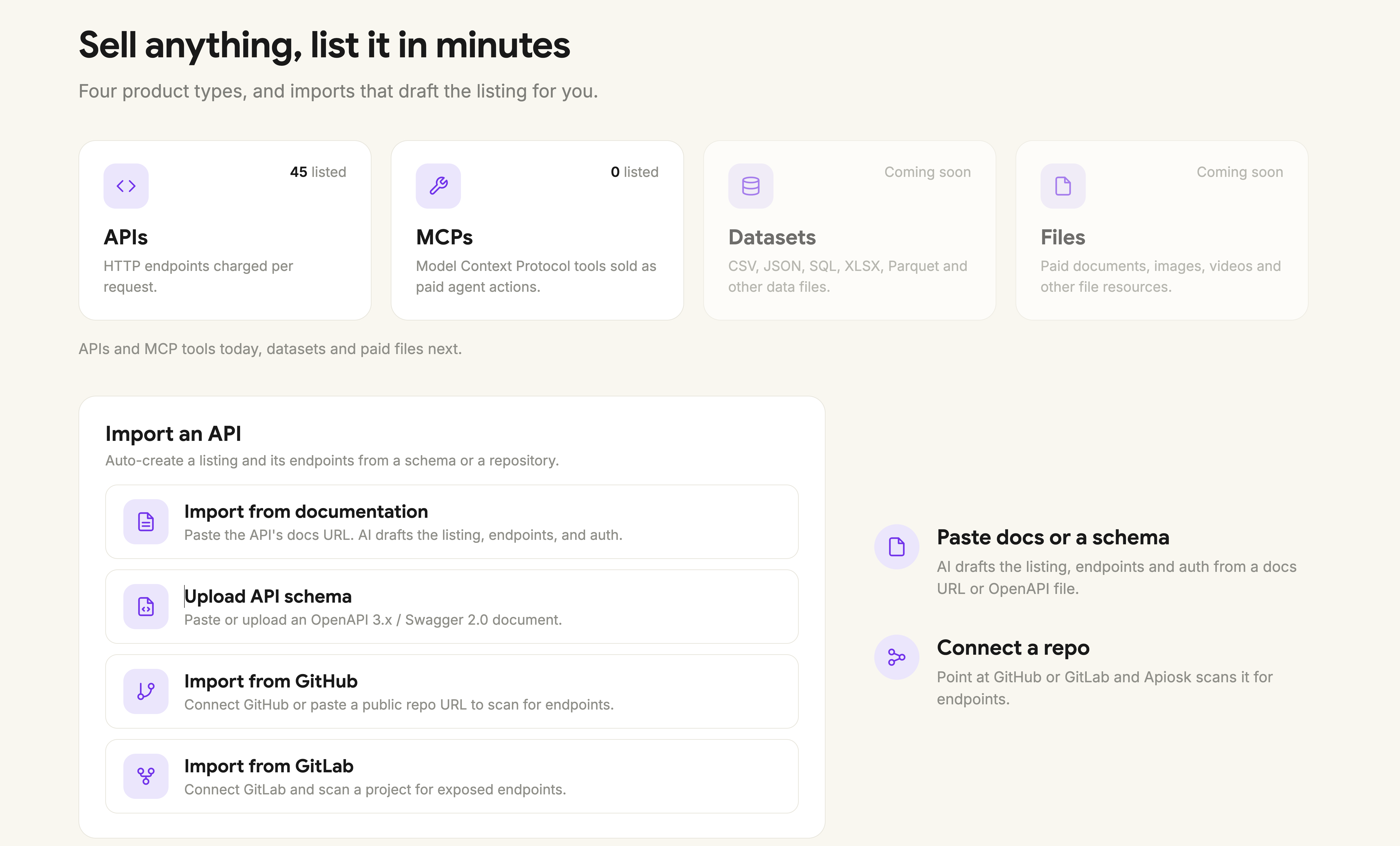
Alongside the gateway, Apiosk provides a management dashboard for publishing APIs, configuring pricing, managing wallets, monitoring usage, and tracking revenue. Providers can expose free and paid endpoints under a single API while maintaining complete control over pricing and access policies.
Gallery
Technologies Used
Key Features
Challenges
- Eliminating API keys without sacrificing security
- * Making payments feel as fast as a normal HTTP request
- * Supporting browsers, servers, scripts, and AI agents with one protocol
- * Designing a scalable gateway capable of very high throughput
- * Giving providers flexible monetization without changing their existing APIs
Solutions
- * Used wallet identity as the authentication mechanism
- * Implemented the x402 payment flow with structured payment requirements
- * Built a Rust reverse proxy optimized for low latency
- * Added intelligent caching to minimize verification overhead
- * Created a unified dashboard for pricing, wallets, analytics, and settlements
- * Designed the platform around existing APIs, requiring minimal integration effort